
Many children love listening to the wise owl story in English because it teaches a simple but powerful lesson in a beautiful way. This is a classic moral story often shared in bedtime storytelling and folktale traditions. The owl is known as a symbol of wisdom, patience, and calm thinking. In this story, we learn how one wise owl helped many animals understand the importance of speaking carefully and listening more. Let us read how one wise owl changed the whole forest with his simple advice.
📖 The Story
In a large green forest, there stood an old banyan tree.
The tree was the tallest in the forest.
On one of its highest branches lived a wise old owl.
The owl had bright eyes, soft feathers, and a calm face.
Every day, he sat quietly on his branch and watched everything happening around him.
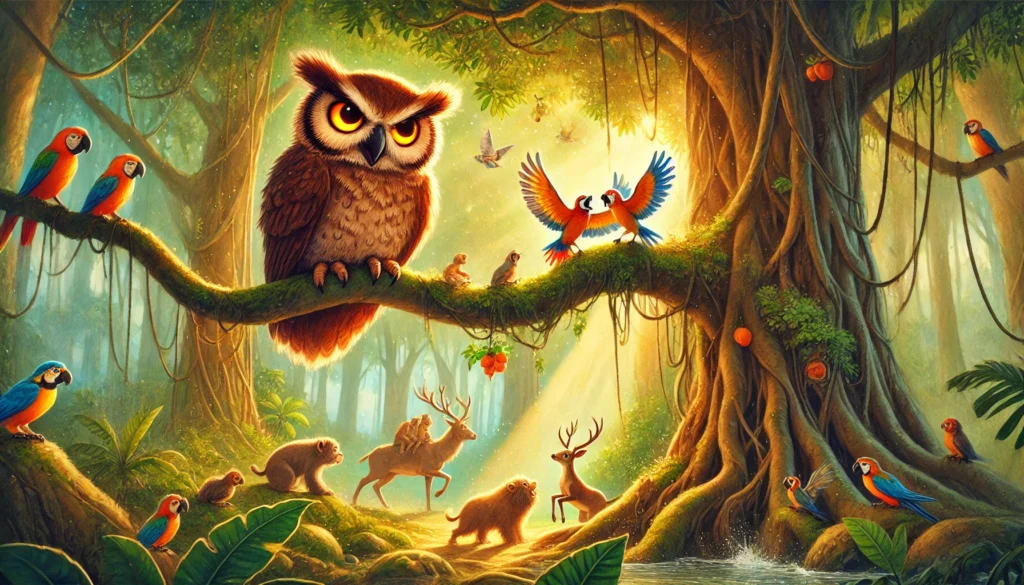
He watched rabbits running.
He watched monkeys jumping.
He watched deer drinking water.
He watched birds singing.
The owl did not speak much.
He listened more than he talked.
All the animals in the forest respected him because he always stayed calm and peaceful.
Whenever someone had a problem, they went to the owl for advice.
One sunny morning, two parrots were sitting on a nearby branch.
They started arguing loudly.
“This fruit is mine!” shouted one parrot.
“No, I saw it first!” shouted the other.
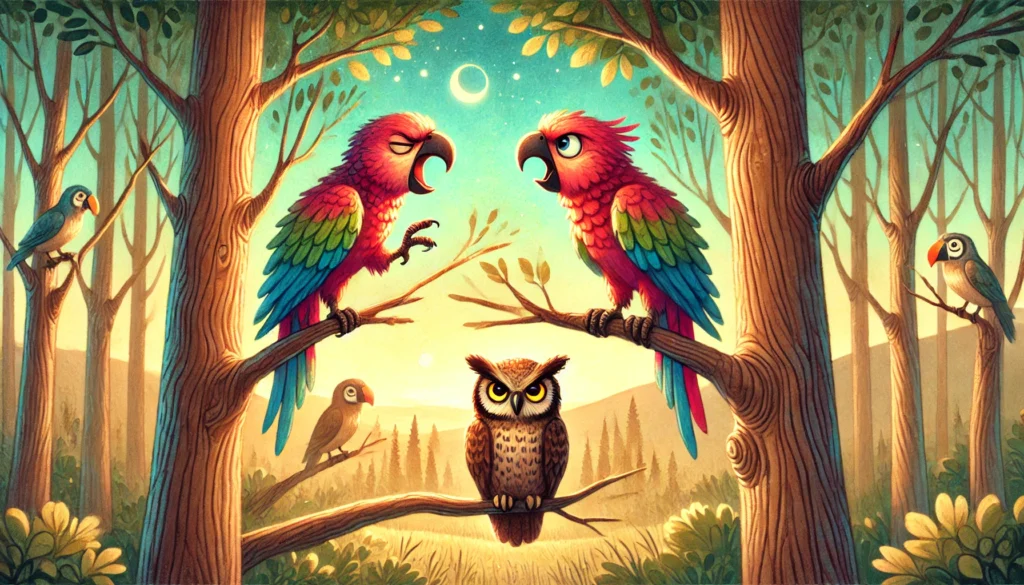
Soon, both parrots were screaming at each other.
Their loud voices disturbed everyone.
The owl quietly watched them.
After some time, the parrots stopped and flew away angrily.
The next day, two monkeys began fighting over a banana.
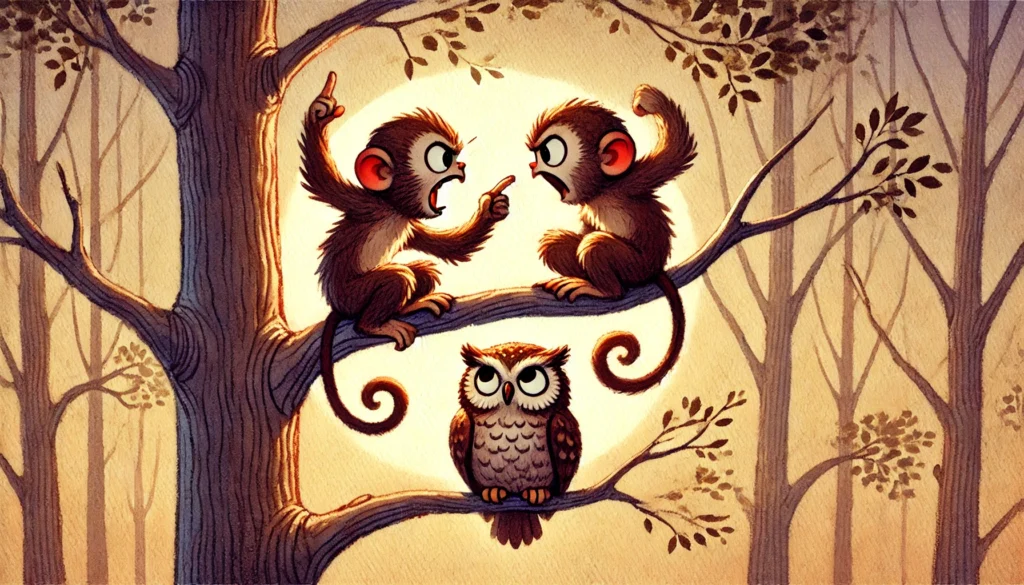
They shouted and made a lot of noise.
“You are selfish!” one monkey yelled.
“You are greedy!” the other screamed.
Again, the owl watched silently.
Then one afternoon, a young rabbit came to the owl.
“Dear Owl,” said the rabbit, “why do animals fight so much in this forest?”
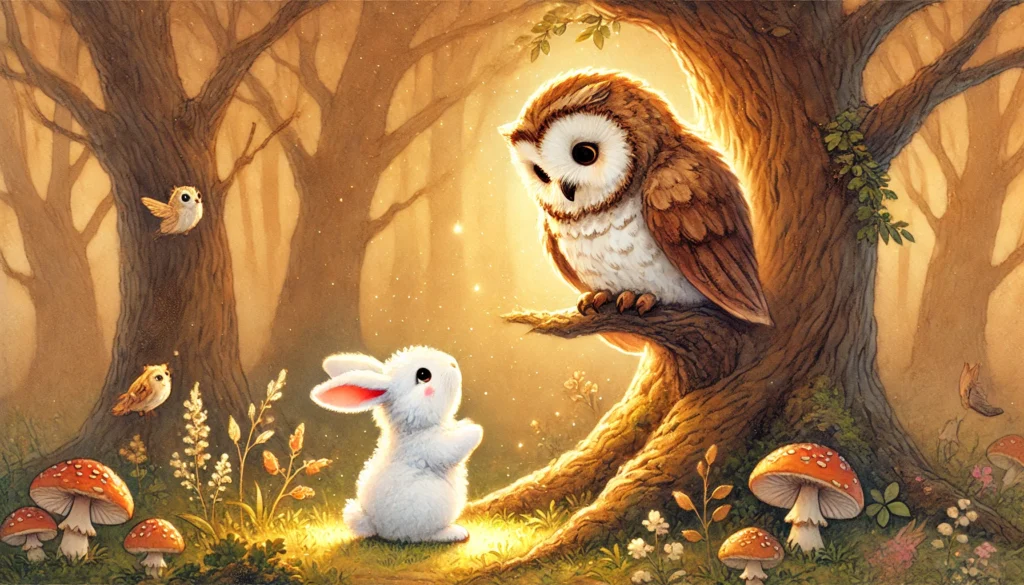
The owl smiled gently.
He said, “Because many speak before they think.”
The rabbit looked confused.
“What does that mean?” he asked.
The owl replied, “When we speak without thinking, we hurt others. Angry words can create big problems.”
The rabbit listened carefully.
The owl continued, “Wise people think before they speak. They ask themselves, ‘Will my words help or hurt?’”
The rabbit nodded.
He thanked the owl and went away.
A few days later, something happened.
A fox and a deer were drinking water near the river.
The fox accidentally pushed the deer.
The deer became angry.
“Why did you do that?” shouted the deer.
“You are so rude!”
The fox became angry too.
“It was an accident!” he yelled back.
Soon, they were both shouting loudly.
The rabbit quickly ran to the owl.
“Please help!” cried the rabbit.
The wise owl flew down slowly and landed near the river.
He looked at both animals calmly.
Then he asked, “Before you speak again, stop and think. Ask yourself—will your next words solve the problem or make it worse?”
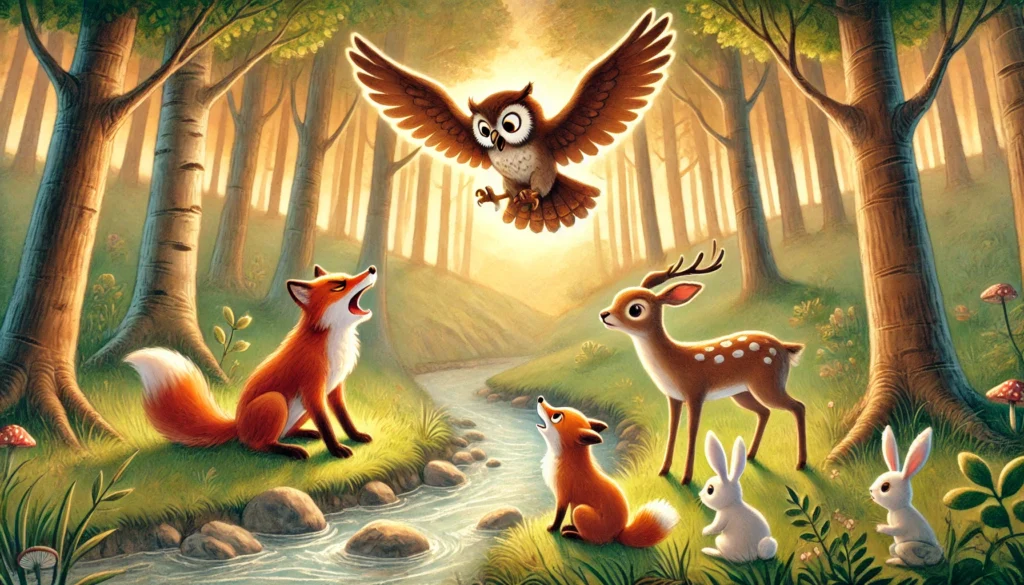
The fox and deer became quiet.
They looked at each other.
After a moment, the deer spoke softly.
“I am sorry. I shouted too quickly.”
The fox lowered his head.
“I am sorry too. I should have explained calmly.”
Both animals smiled and forgave each other.
The rabbit looked amazed.
The owl said, “You see? Angry words make fire bigger. Calm words put the fire out.”
Soon, many animals heard about what happened.
From that day, they all started trying to think before speaking.
Whenever they became angry, they remembered the owl’s words.
“Stop. Think. Speak kindly.”
Slowly, the forest became more peaceful.
Animals fought less.
They listened more.
They respected each other.
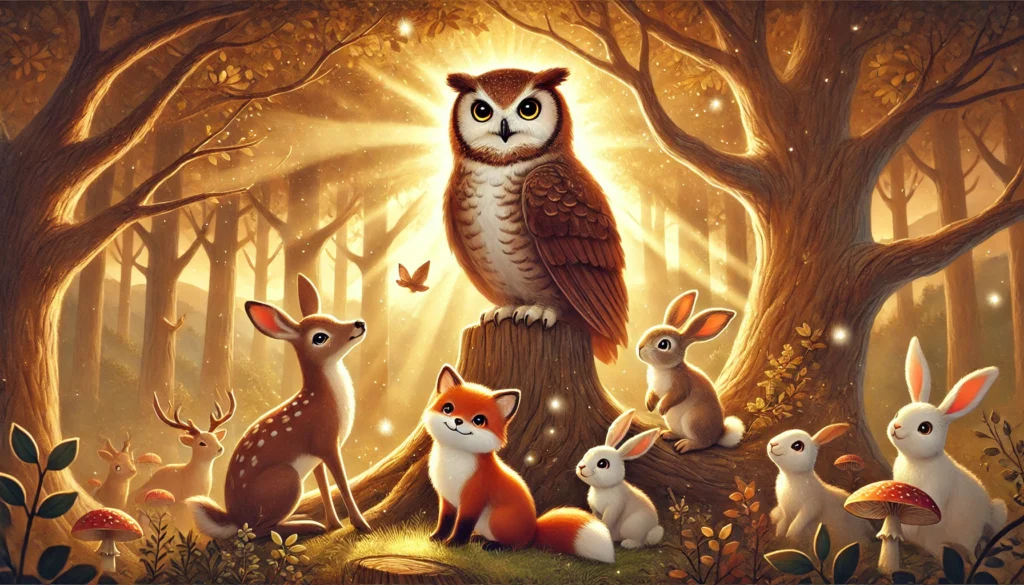
And every evening, the wise owl sat on his tree smiling proudly.
He knew the forest had learned an important lesson.
The rabbit often visited him and said, “Dear Owl, you have made everyone wiser.”
The owl smiled and replied, “Wisdom begins when we learn to control our words.”
And from that day, everyone remembered:
Sometimes silence is smarter than speaking.
The owl’s wisdom helped everyone stay calm, just like in the Ant and Grasshopper story, where smart thinking saved lives.
And thoughtful words are better than careless ones.
Moral of the Story
Think before you speak because words can hurt or heal.
Words are very powerful. If we speak in anger, we may hurt someone’s feelings. But if we think first and speak kindly, we can solve problems peacefully. Just like the wise owl taught the animals, calm and thoughtful words make life better. Good people always choose their words carefully.
What Kids Learn from the Story
- Think before speaking
- Stay calm when angry
- Use kind words
- Solve problems peacefully
- Listen more than you speak
Short Summary
This story tells about a wise owl who lived in a forest and watched animals fight often. He taught them that many problems happen because people speak without thinking. One day, he helped a fox and deer stop fighting by asking them to think before speaking. The animals learned to use kind and thoughtful words. The story teaches that careful speech brings peace.
Frequently Asked Questions (FAQs)
What is the moral of the Wise Owl story?
The moral is to think before speaking because words can hurt or help others.
Is this a Panchatantra story?
It is not an original Panchatantra tale, but it follows a similar moral storytelling style.
Why should children read this story?
Children should read this story because it teaches patience, kindness, and careful speaking.
What values does this story teach?
This story teaches wisdom, patience, kindness, and emotional control.
Read More Stories
- The Proud Peacock Story in English with Moral – A Lesson About True Beauty
- The Foolish Donkey Story in English with Moral – A Big Mistake of Pretending
- The Farmer and His Lazy Sons Story in English with Moral – Hard Work Brings Success
- The Boy and the Filberts Story in English with Moral for Kids (Greedy Boy Story)
- 5 Short Moral Stories for Kids in English – Powerful Lessons Every Child Should Learn
Once upon a time, Every morning in a small town lived a boy named Arjun.
The alarm clock rang at six...

Opening Introduction
Every evening, little Anu waited for her father to come home. Her father, Arjun,...
Introduction
The Two Cats and the Monkey Story in English with Moral is a famous moral tale that teaches...

Let me tell you a warm and beautiful story today. This **kind farmer and the bird story in English** is a...
Let me tell you an interesting and slightly funny story today. This **foolish fox and drum story in English** is a...
The lazy farmer story in English is a beautiful moral story that teaches children why hard work is important...