
Easy Sanskrit Slokas with Meaning in English for Kids are a wonderful way to introduce children to Indian culture, values, and spiritual wisdom. These simple Sanskrit verses are easy to memorize and carry important life lessons about respect, learning, kindness, gratitude, and positive thinking.
For centuries, children in India have learned Sanskrit slokas at home and in schools. These slokas help improve memory, concentration, pronunciation, and confidence. More importantly, they teach good habits and strong moral values that help children become responsible and caring individuals.
In this article, we will explore 10 easy Sanskrit slokas with meaning in English for kids. Each sloka is simple, meaningful, and perfect for beginners. Let us discover the timeless wisdom hidden in these beautiful verses.
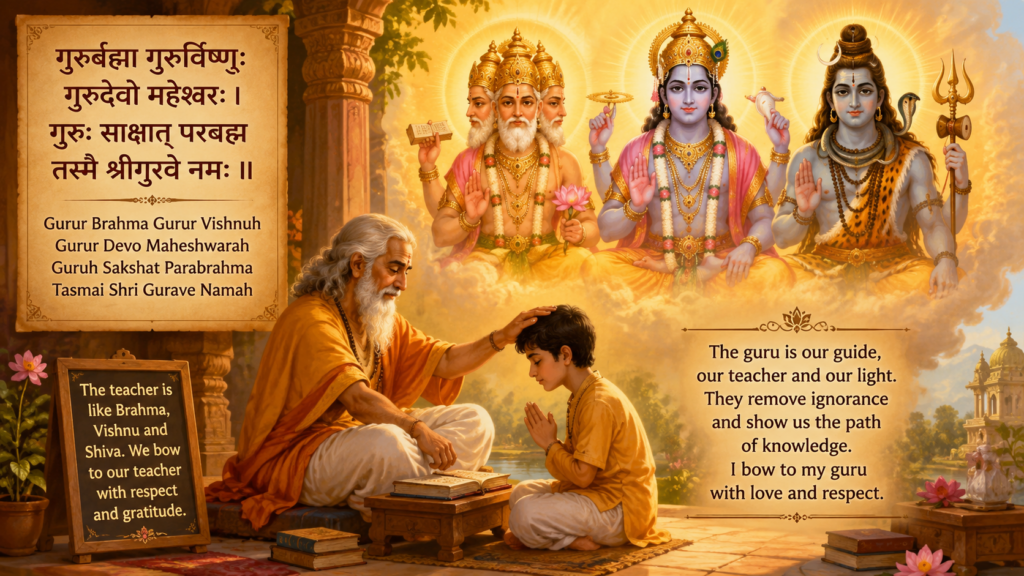
1. Guru Brahma Guru Vishnu
Sanskrit
गुरुर्ब्रह्मा गुरुर्विष्णुः गुरुर्देवो महेश्वरः।
गुरुः साक्षात् परब्रह्म तस्मै श्रीगुरवे नमः॥
Transliteration
Gurur Brahma Gurur Vishnuh
Gurur Devo Maheshwarah
Guruh Sakshat Parabrahma
Tasmai Shri Gurave Namah
Meaning
The teacher is like Brahma, Vishnu, and Shiva. The teacher guides us toward knowledge and wisdom. We bow respectfully to our teacher.
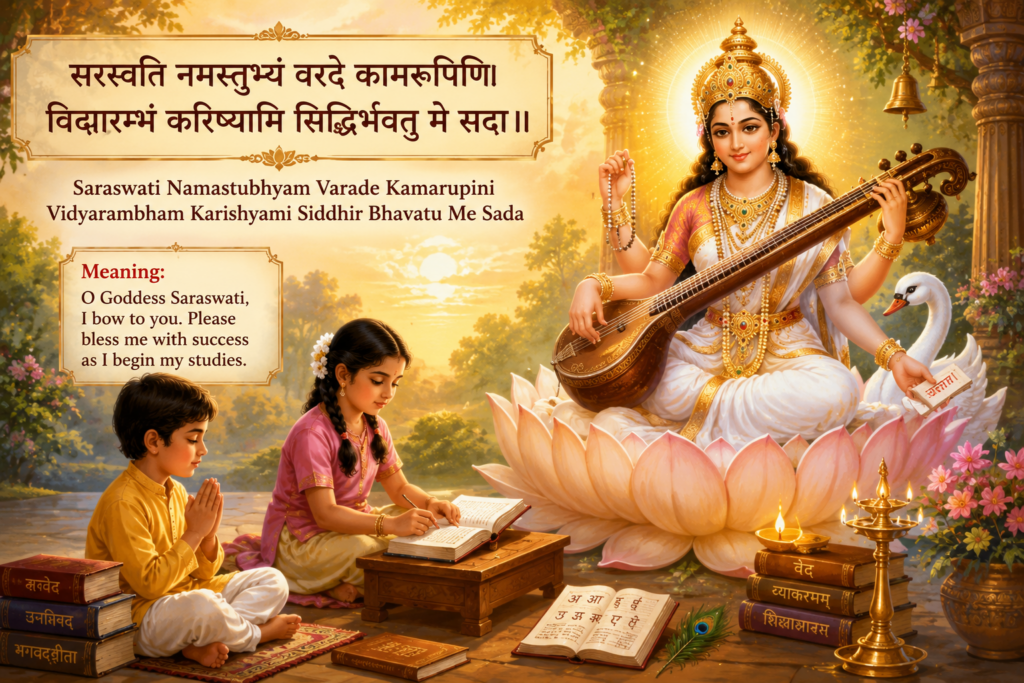
2. Saraswati Vandana
Sanskrit
सरस्वति नमस्तुभ्यं वरदे कामरूपिणि।
विद्यारम्भं करिष्यामि सिद्धिर्भवतु मे सदा॥
Transliteration
Saraswati Namastubhyam
Varade Kamarupini
Vidyarambham Karishyami
Siddhir Bhavatu Me Sada
Meaning
O Goddess Saraswati, I bow to you. Please bless me with success as I begin my studies.
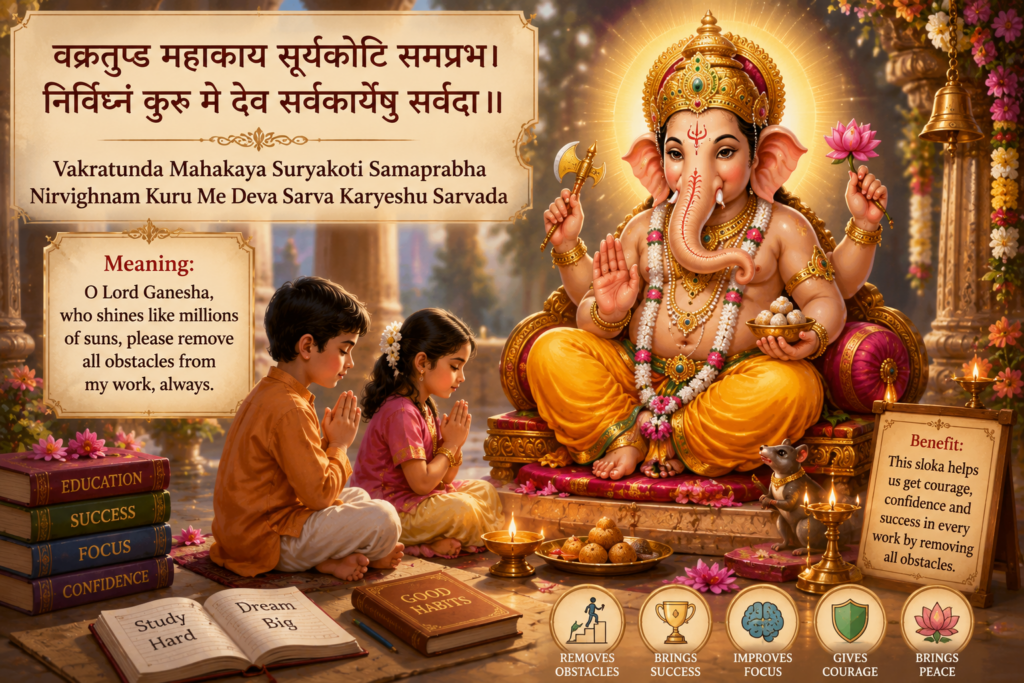
3. Vakratunda Mahakaya
Sanskrit
वक्रतुण्ड महाकाय सूर्यकोटि समप्रभ।
निर्विघ्नं कुरु मे देव सर्वकार्येषु सर्वदा॥
Transliteration
Vakratunda Mahakaya
Suryakoti Samaprabha
Nirvighnam Kuru Me Deva
Sarva Karyeshu Sarvada
Meaning
O Lord Ganesha, who shines like millions of suns, please remove all obstacles from my work.
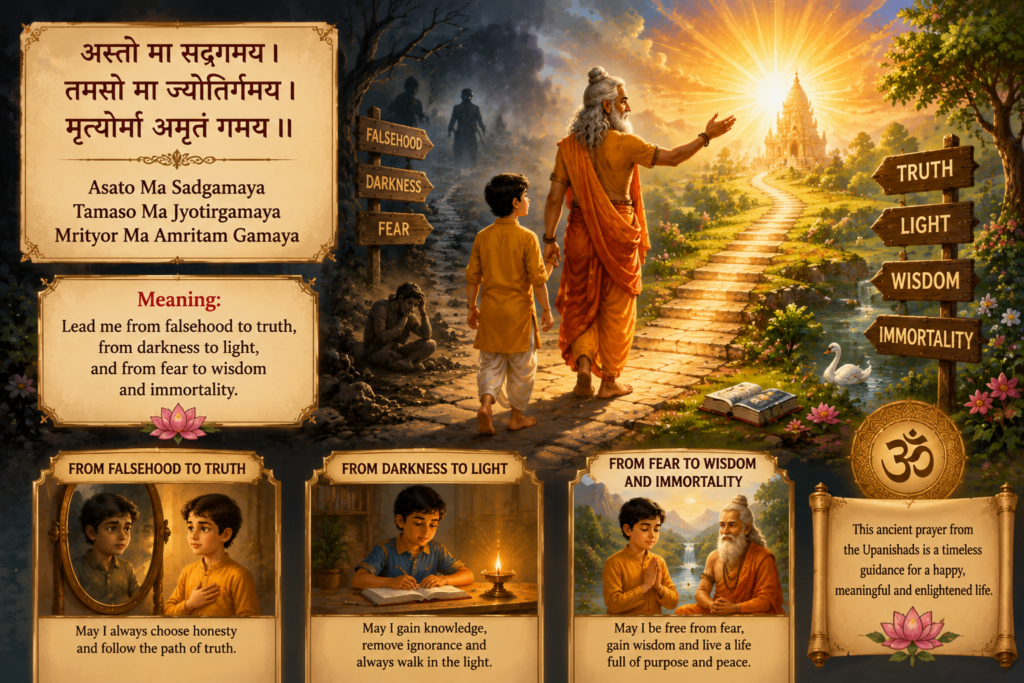
4. Asato Ma Sadgamaya
Sanskrit
असतो मा सद्गमय।
तमसो मा ज्योतिर्गमय।
मृत्योर्मा अमृतं गमय॥
ॐ शान्तिः शान्तिः शान्तिः॥
Transliteration
Asato Ma Sadgamaya
Tamaso Ma Jyotirgamaya
Mrityor Ma Amritam Gamaya
Om Shantih Shantih Shantih
Meaning
Lead me from falsehood to truth, from darkness to light, and from mortality to immortality. May there be peace everywhere.
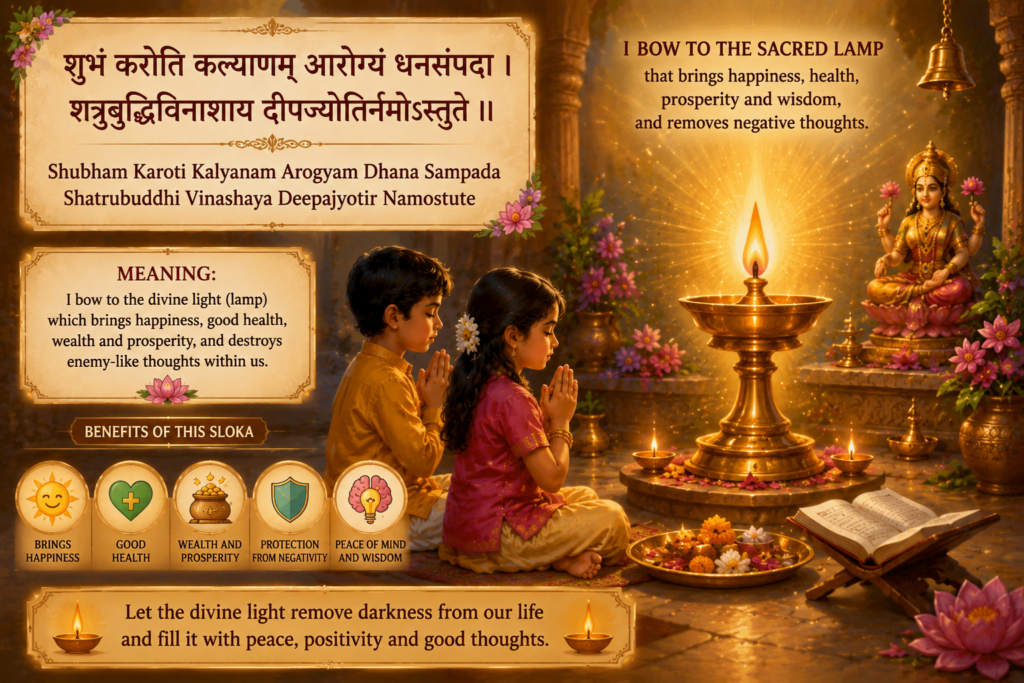
5. Shubham Karoti Kalyanam
Sanskrit
शुभं करोति कल्याणम् आरोग्यं धनसंपदा।
शत्रुबुद्धिविनाशाय दीपज्योतिर्नमोऽस्तुते॥
Transliteration
Shubham Karoti Kalyanam
Arogyam Dhana Sampada
Shatrubuddhi Vinashaya
Deepajyotir Namostute
Meaning
I bow to the sacred lamp that brings happiness, health, prosperity, and wisdom.
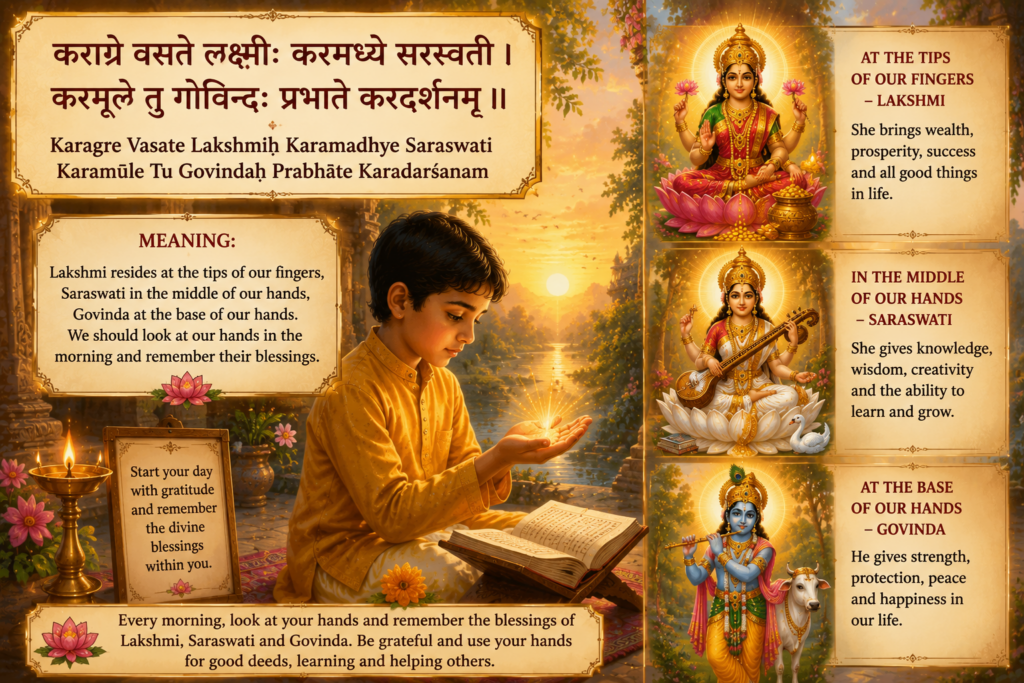
6. Karagre Vasate Lakshmi
Sanskrit
कराग्रे वसते लक्ष्मीः करमध्ये सरस्वती।
करमूले तु गोविन्दः प्रभाते करदर्शनम्॥
Transliteration
Karagre Vasate Lakshmi
Karamadhye Saraswati
Karamule Tu Govindah
Prabhate Karadarshanam
Meaning
The blessings of Lakshmi, Saraswati, and Govinda are present in our hands. We should begin the day with gratitude.
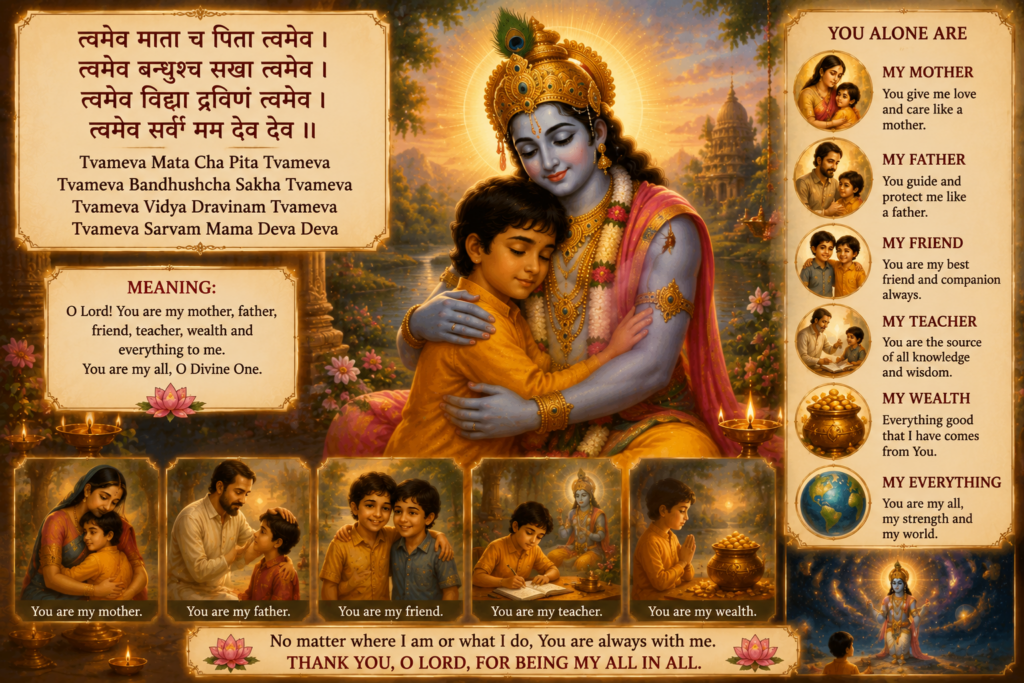
7. Tvameva Mata Cha Pita Tvameva
Sanskrit
त्वमेव माता च पिता त्वमेव।
त्वमेव बन्धुश्च सखा त्वमेव।
त्वमेव विद्या द्रविणं त्वमेव।
त्वमेव सर्वं मम देव देव॥
Transliteration
Tvameva Mata Cha Pita Tvameva
Tvameva Bandhushcha Sakha Tvameva
Tvameva Vidya Dravinam Tvameva
Tvameva Sarvam Mama Deva Deva
Meaning
O Lord, you are my mother, father, friend, teacher, knowledge, wealth, and everything.
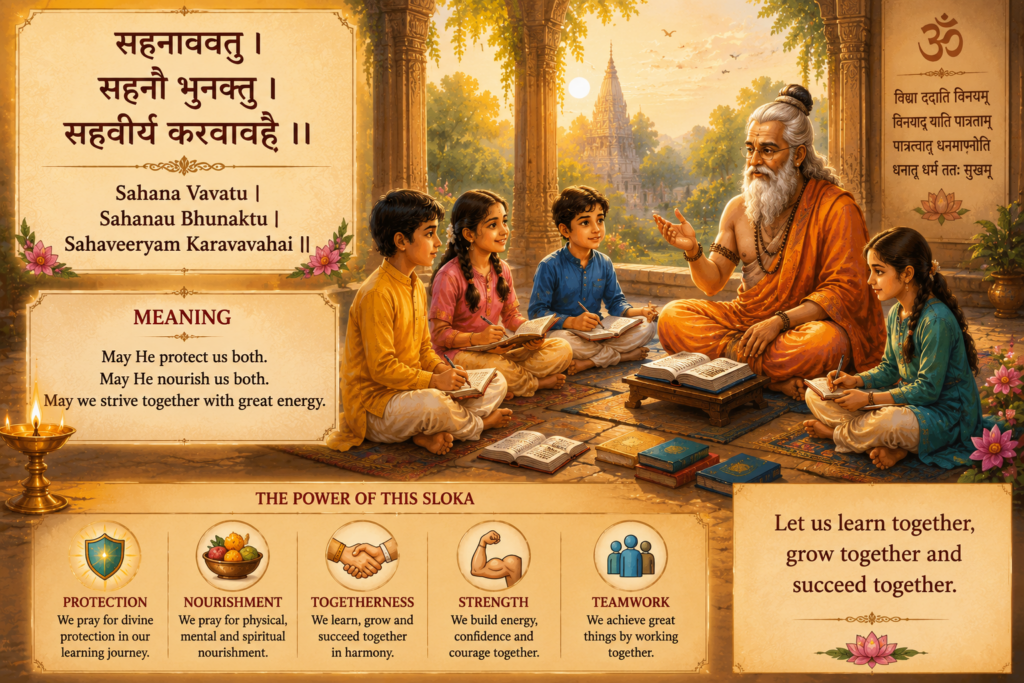
8. Sahana Vavatu (Full Version)
Sanskrit
सहनाववतु।
सहनौ भुनक्तु।
सहवीर्यं करवावहै।
तेजस्विनावधीतमस्तु।
मा विद्विषावहै॥
ॐ शान्तिः शान्तिः शान्तिः॥
Transliteration
Sahanavavatu
Sahanau Bhunaktu
Sahaveeryam Karavavahai
Tejasvinavadhitamastu
Ma Vidvishavahai
Om Shantih Shantih Shantih
Meaning
May God protect us both.
May He nourish us both.
May we work together with great energy.
May our learning be bright and successful.
May we never hate one another.
Peace, peace, peace.
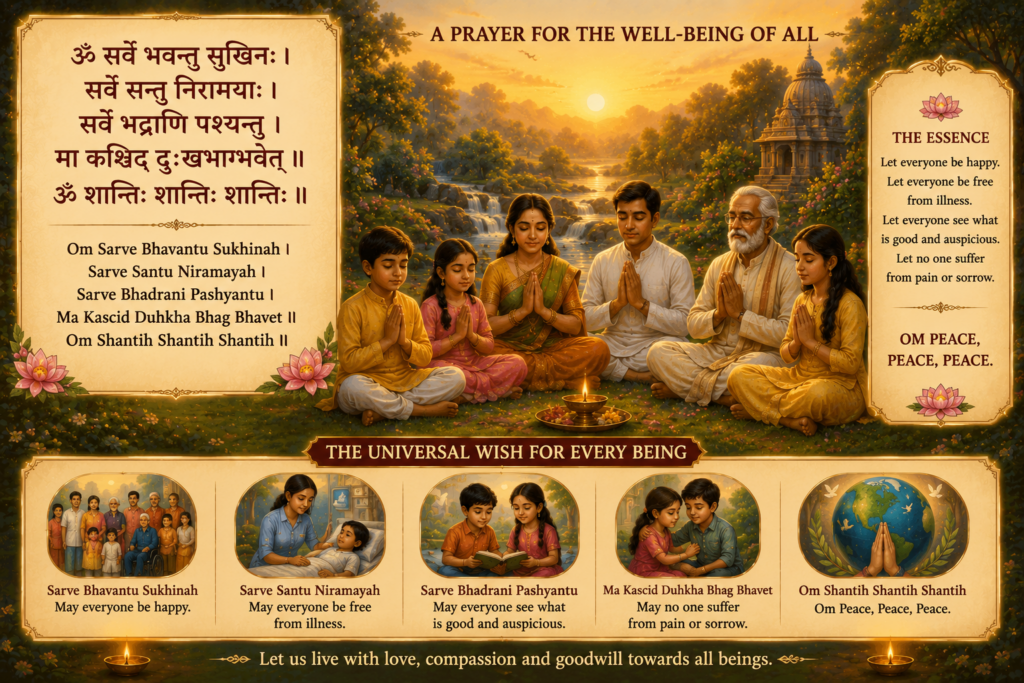
9. Om Sarve Bhavantu Sukhinah (Full Version)
Sanskrit
ॐ सर्वे भवन्तु सुखिनः।
सर्वे सन्तु निरामयाः।
सर्वे भद्राणि पश्यन्तु।
मा कश्चिद् दुःखभाग्भवेत्॥
ॐ शान्तिः शान्तिः शान्तिः॥
Transliteration
Om Sarve Bhavantu Sukhinah
Sarve Santu Niramayah
Sarve Bhadrani Pashyantu
Ma Kashcid Duhkha Bhag Bhavet
Om Shantih Shantih Shantih
Meaning
May everyone be happy.
May everyone be healthy.
May everyone see goodness.
May no one suffer from sorrow.
Peace, peace, peace.
10. Vidya Dadati Vinayam (Full Version)
Sanskrit
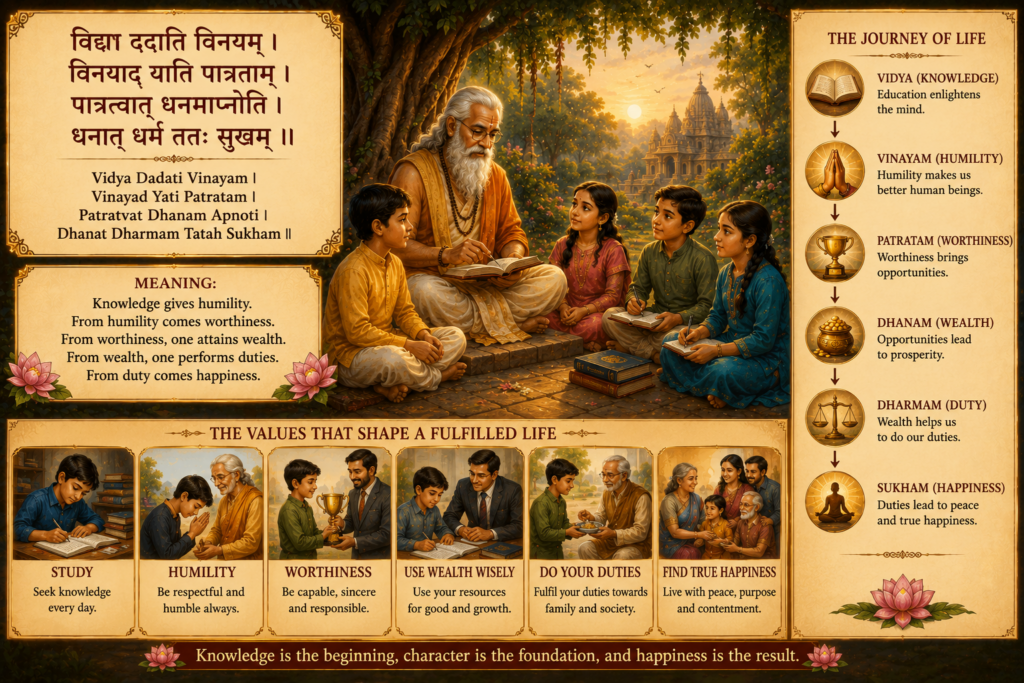
विद्या ददाति विनयं।
विनयाद् याति पात्रताम्।
पात्रत्वात् धनमाप्नोति।
धनात् धर्मं ततः सुखम्॥
Transliteration
Vidya Dadati Vinayam
Vinayad Yati Patratam
Patratvat Dhanam Apnoti
Dhanat Dharmam Tatah Sukham
Meaning
Knowledge gives humility.
Humility leads to worthiness.
Worthiness brings prosperity.
Prosperity helps a person perform righteous actions.
Righteous living leads to true happiness.
Full Meaning in English
These easy Sanskrit slokas teach some of the most important values in life. They encourage children to respect teachers, pray before studying, overcome obstacles, seek truth, appreciate knowledge, and care for others. Even though these slokas are short, they contain wisdom that has guided people for generations.
Children who learn these slokas develop better focus, memory, and confidence. Reciting them daily creates a positive mindset and helps build discipline. The slokas also introduce children to India’s rich spiritual and cultural heritage in a simple and enjoyable way.
Many of these prayers teach gratitude, kindness, teamwork, humility, and respect. These values are important not only in school but also at home and in society. By understanding their meanings, children can apply these lessons in everyday life and grow into responsible and compassionate individuals.
The Lesson We Learn
The greatest lesson from these Sanskrit slokas is that good character is more valuable than anything else. Knowledge, kindness, respect, honesty, and gratitude help children succeed in every stage of life.
The Guru Sloka teaches respect for teachers. Saraswati Vandana encourages love for learning. Ganesha’s prayer reminds us to stay positive when facing challenges. Asato Ma teaches us to choose truth over falsehood. Vidya Dadati Vinayam shows that true education makes us humble.
In today’s world, children face many distractions. These slokas help them stay focused on values that truly matter. Learning a few lines every day can create a habit of positive thinking and self-discipline.
For example, a child who remembers “Vidya Dadati Vinayam” may learn to stay humble even after achieving success. A student who recites Saraswati Vandana before exams may feel calmer and more confident. Children who learn “Sarve Bhavantu Sukhinah” develop empathy and care for others.
These simple verses are not just prayers. They are practical guides for living a happy and meaningful life.
Why Kids Should Learn This Sloka Collection
Kids should learn these Sanskrit slokas because they are simple, meaningful, and easy to remember. They improve pronunciation, concentration, and memory skills while introducing children to timeless wisdom.
Regular recitation helps children develop discipline and confidence. It also strengthens their connection with Indian culture and traditions. Many schools encourage children to learn slokas because they promote positive thinking and good behavior.
These slokas teach respect for parents, teachers, friends, and society. They encourage gratitude, kindness, and humility. Unlike long texts, these short verses are easy for young children to memorize and understand.
When children learn the meanings behind the words, they begin applying these lessons naturally in daily life. This makes slokas a wonderful tool for character building and personal growth.
How to Apply These Slokas in Daily Life
- Recite Saraswati Vandana before starting homework or studies.
- Chant Vakratunda Mahakaya before important tasks or exams.
- Practice gratitude every morning with Karagre Vasate Lakshmi.
- Show respect to teachers by remembering Guru Brahma Guru Vishnu.
- Think about the happiness of everyone through Sarve Bhavantu Sukhinah.
Moral of the Sloka
Good values, respect, knowledge, and kindness are the true foundations of a happy and successful life.
Short Summary
These 10 easy Sanskrit slokas with meaning in English for kids introduce important life lessons in a simple and memorable way. They teach respect, wisdom, gratitude, teamwork, humility, and positive thinking. Children can easily learn and recite these short verses every day. Along with improving memory and concentration, these slokas help build strong moral character and a deeper appreciation for Indian culture and traditions. They are perfect for beginners, students, parents, and teachers.
Frequently Asked Questions (FAQs)
1. What is the meaning of these slokas?
These slokas teach important values such as respect, knowledge, gratitude, kindness, and positive thinking.
2. Who said these slokas?
Most of these slokas come from ancient Hindu scriptures, prayers, and traditional teachings passed down through generations.
3. Why are these slokas important?
They help children develop good habits, moral values, concentration, and cultural awareness.
4. Can children learn these slokas?
Yes. These slokas are short, simple, and ideal for beginners and young children.
5. How can these slokas help in daily life?
They inspire positive thinking, discipline, gratitude, respect, and confidence in everyday situations.
Read More Articles
- Ugadi Story for Kids in English with Moral – The Magic Bowl Story
- Krishna and the Butter Thief Story in English – The Sweet Secret Behind Krishna’s Mischief
- The Night a Simple Devotee Won Lord Shiva’s Heart
- How Upakosala Learned the Secret of Focus and Inner Peace
- When the Gods Forgot Their Strength – A Beautiful Indian Mythology Story for Kids
- Sita’s Tarpana: A Testament of Devotion and Truth

Introduction
Bhagavad Gita Sloka 2.47 Meaning in English is one of the most famous and inspiring verses...
Introduction
The Krishna and the Butter Thief Story in English is one of the most loved stories from...

There are some stories that stay with us forever. The story of Lord Rama is one such story. It is not...
The Ugadi Magic Bowl Story is a heartwarming moral story for children that celebrates the joy and meaning...

Mythology Story for Kids tells us that God looks at our heart, not our status, wealth, or knowledge.
Long...
Mythology Story for Kids often teaches us that true learning happens not only from books, but also from...